


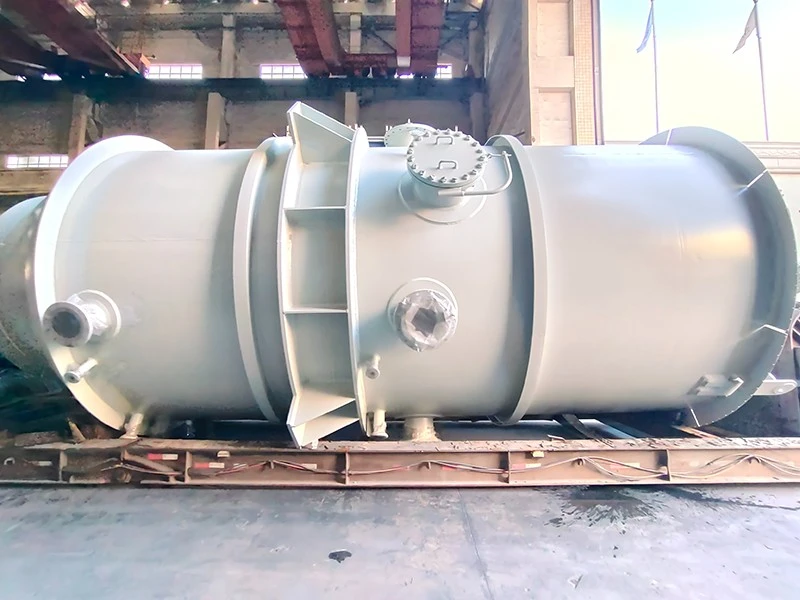
Description
A compressed air storage tank, also known as a compressed air energy storage (CAES) system, is a device used to store compressed air for later use. It's a way to store energy in the form of compressed air, which can be used to generate electricity when needed.
The basic components of a compressed air storage tank include:
1. Compressor: This is the device that compresses air, increasing its pressure and reducing its volume. The compressed air is then stored in the storage tank.
2. Storage tank: This is a large, high-pressure vessel that stores the compressed air. The tank is typically made of steel or other strong materials to withstand the high pressure.
3. Heat exchanger: This component is used to recover and reuse the heat generated during the compression process. The heat exchanger helps to improve the overall efficiency of the system.
4. Expansion turbine: When the stored compressed air is released, it passes through an expansion turbine, which converts the stored energy back into mechanical energy. This mechanical energy is then used to drive a generator, which produces electricity.
5. Generator: The mechanical energy from the expansion turbine is converted into electrical energy by the generator, which is then supplied to the power grid.
Compressed air storage tanks are used in various applications, such as energy storage, pneumatic power systems, and backup power sources. They can be used to store excess energy from renewable sources like wind and solar power, which can then be used during periods of high demand or when the renewable sources are not generating electricity.
Advantage
The main advantage is its ability to store large amounts of energy for long periods, making it a viable option for grid-scale energy storage. However, it's essential to note that CAES systems can be expensive and require significant space for the storage tanks.
FAQ
Q: How to control the temperature of pressure vessels during use?
Q: What factors affect the service life of pressure vessels?
Q: How to perform regular maintenance on pressure vessels?
Hot Tags: compressed air storage tank, China compressed air storage tank manufacturers, suppliers, factory, Steam Heat Exchanger, non insulated storage tank, storage tank for resins, cone bottom storage tank, storage tank for emulsifiers, storage tank for hypercritical fluids


