


Why Choose Us?
Professional Team
We possess a high-tech and well-trained team consisting of over 260 employees, among whom there are 80 engineering and technical personnel (5 senior engineers and 50 professionals with junior and intermediate titles) and more than 100 certified welders.
Advanced Equipment
In addition to the high-quality production supporting equipment, the company is equipped with advanced and perfect inspection and testing equipment, pressure leakage test equipment, physical and chemical equipment, and a welding laboratory, etc.
Complete Product Range
Our products include heat exchanger, separator, reactor, storage tank, tower, cryogenic equipment, filters, chemical and alumina evaporator.
Quality Control
The company has passed ISO: 9001 standard quality system certification, ISO14001 environmental management system certification, and ISO45001.
What Is Hydrogen Storage Tank
A hydrogen storage tank is a container or a vessel used to store hydrogen in its gaseous or liquid form. Sometimes they are also referred to as hydrogen cylinders, cartridges or canisters. Depending on the pressure and temperature of storage the container must fulfil various tedious physical requirements, and therefore the art and science of designing and manufacturing hydrogen storage tanks has a long history of innovation.

Diesel storage tanks are specialized containers designed for the safe storage of diesel fuel.

Oil storage tanks are large, specialized containers designed to store crude oil or refined petroleum products safely and efficiently.

A gas storage tank with a pump is a system designed to store and transport gases safely and efficiently.

A compressed air storage tank, also known as a compressed air energy storage (CAES) system.

Stainless steel storage tanks are durable and corrosion-resistant containers used for storing various liquids.

Carbon steel storage tanks are large containers designed to store various substances.
What Are the Different Types of Hydrogen Storage Tanks
Type I hydrogen storage tank
Type I hydrogen storage tanks are made up entirely of metal and consist of a metallic liner only with the neck part and an optional end plug shown above. There is no outer wrapping and the construction and manufacture of this type of tank is fairly simple and therefore also comparatively low in cost. Such a tank is also called type 1 hydrogen storage tank, type I hydrogen cylinder or type 1 hydrogen cylinder.
Type II hydrogen storage tank
Type II hydrogen storage tanks consist of a metallic inner liner (usually aluminium) around which an outer wrapping added in order to strengthen its physical qualities. These allow for higher hydrogen storage tank pressures with a comparatively thin liner, therefore providing a weight advantage in comparison to a situation where the inner liner would have to be made so think as to withstand the same pressure. The outer wrapping is made of synthetic material. Such a tank is also called type 2 hydrogen storage tank, type II hydrogen cylinder or type 2 hydrogen cylinder.
Type III hydrogen storage tank
In Type III hydrogen storage tanks the inner metallic liner is reduced to the level that it is essentially no longer bearing the pressure load but this is done entirely by other layers wrapped around it. The outer wrapping therefore takes up additional restraining and physical support tasks. Such a tank is also called type 3 hydrogen storage tank, type III hydrogen cylinder or type 3 hydrogen cylinder.
Type IV hydrogen storage tank
Type IV hydrogen storage tanks have a non-metallic inner liner made of composite materials and are encased in an outer wrapping made up of carbon fibre and other interwoven thermoplastic polymers. In comparison to type I tanks these bear up to 70% less weight and therefore this type of tank is particularly attractive for applications where the hydrogen needs to be stored at high pressures and the system weight needs to be low. This applies for example to many mobile and aeronautic applications. A type IV hydrogen storage tank is also called type 4 hydrogen storage tank, type IV hydrogen cylinder or type 4 hydrogen cylinder.
The primary intention of any hydrogen storage tank is to store this gas in a safe manner while still allowing it to be accessed when required (such as within an electric vehicle or when employed as a back-up power supply.
A high pressure hydrogen storage tank also provides a convenient means to transport this gas from one location to another. For instance, a large hydrogen storage tank may be employed to deliver this fuel to a distribution centre. It can then pump the hydrogen into smaller units (for storage or immediate consumption).
Having said this, hydrogen storage tank safety is also a key concern. This primarily results from the fact that hydrogen is an extremely flammable gas. It is also colourless, odourless and tasteless. Thus, it can be difficult to detect a leak. If exposed to an external source of combustion, hydrogen can easily ignite. This is why any hydrogen storage tank must be engineered to the highest of standards.

Hydrogen can be stored physically as either a gas or a liquid. Storage of hydrogen as a gas typically requires high-pressure tanks (350–700 bar [5,000–10,000 psi] tank pressure). Storage of hydrogen as a liquid requires cryogenic temperatures because the boiling point of hydrogen at one atmosphere pressure is −252.8°C. Hydrogen can also be stored on the surfaces of solids (by adsorption) or within solids (by absorption).
Key Features of Hydrogen Storage Tanks
● High Pressure Resistance: Typically designed to withstand pressures of 350 to 700 bar (5,000 to 10,000 psi).
● Low Permeability: Constructed to minimize hydrogen leakage.
● Lightweight Design: Especially important for mobile applications.
● Safety Features: Includes pressure relief devices and other safety mechanisms.
When selecting a hydrogen storage tank, it's essential to consider various specifications to ensure it meets your needs. Here are some key specifications to keep in mind:
Capacity
Volume: The storage capacity of the tank, usually measured in liters or kilograms, determines how much hydrogen it can hold.
Pressure Rating: Ensure the tank can safely store hydrogen at the required pressure, typically between 350 and 700 bar.
Materials
Liner Material: The choice of liner material (metal or plastic) affects the tank's weight, durability, and resistance to corrosion.
Composite Materials: The type and quality of composite materials used in the tank construction impact its strength and weight.
Safety Features
Leak Detection: Advanced leak detection systems are crucial for early identification of potential issues.
Pressure Relief Devices: These devices help prevent over-pressurization, ensuring safe operation.
Certification and Standards
Compliance: Ensure the tank complies with relevant safety standards and certifications, such as ISO, DOT, or EC regulations.
The Key Functions of Hydrogen Storage Tanks
Hydrogen storage tanks serve multiple critical functions:
Storage and conservation: They provide a way to hold large volumes of material until needed, reducing losses that might occur through evaporation or spillage. This allows for efficient inventory management, ensuring a steady supply of materials for ongoing operations without shortages.
Mixing and blending: Certain tanks are designed for mixing or blending different liquids or gasses to create specific formulations.
Transportation: Portable hydrogen storage tanks are used to transport liquids or gasses over short distances.
Safety and compliance: Proper storage of hazardous materials helps in complying with safety and environmental regulations.
Buffering: Tanks can act as buffers between the production and the consumption rates, smoothing out fluctuations in demand and supply.
How to Manage Hydrogen Storage Tank Pressure
Fluctuations in pressure are a common occurrence in hydrogen storage tanks and can be attributed to various factors such as changes in temperature, overfilling, under filling, among others. However, these fluctuations can be easily managed with the help of a combination of devices.
Pressure and vacuum relief vents:
Pressure/vacuum relief vents are used on hydrogen storage tanks where the contents are evaporated into the atmosphere for pressure management. The vents open at pre-set levels of vacuum and pressure, preventing the hydrogen storage tank from overpressure and entering into a vacuum. The vents are typically located on pipes or flanges that connect to the vapor space of the storage hydrogen storage tank, and the pressure in this space can vary due to liquid pumping or atmospheric pressures.
Flame arresters:
Flame arresters are passive devices that allow gases to flow through a hydrogen storage tank under normal conditions but prevent the spread of flames during emergencies. They are typically installed in either a vapor piping system or on a storage hydrogen storage tank nozzle.
Emergency relief vents:
Large above ground flammable liquid storage hydrogen storage tanks need means to relieve excessive internal pressure caused by fire exposure. Depending on hydrogen storage tank strength, a regular pressure/vacuum relief vent may not handle abnormal vapor efflux from a fire. To avoid explosions, emergency relief vents should be provided.
Zhangjiagang Changshou Industrial Equipment Manufacturing Co., Ltd
The company has a registered capital of RMB 80 million and a production base area of 35,000 square meters., and a high-tech and well-trained team of more than 260 employees, including 80 engineering and technical personnel (5 senior engineers and 50 professionals with junior and intermediate titles) and more than 100 certified welders. These employees have the extensive experience in the manufacturing and installation of pressure vessels and the on-site manufacturing of large equipment. In addition to the high-quality production supporting equipment, the company has the advanced and perfect inspection and testing equipment, pressure leakage test equipment, physical and chemical equipment, welding laboratory and so on.


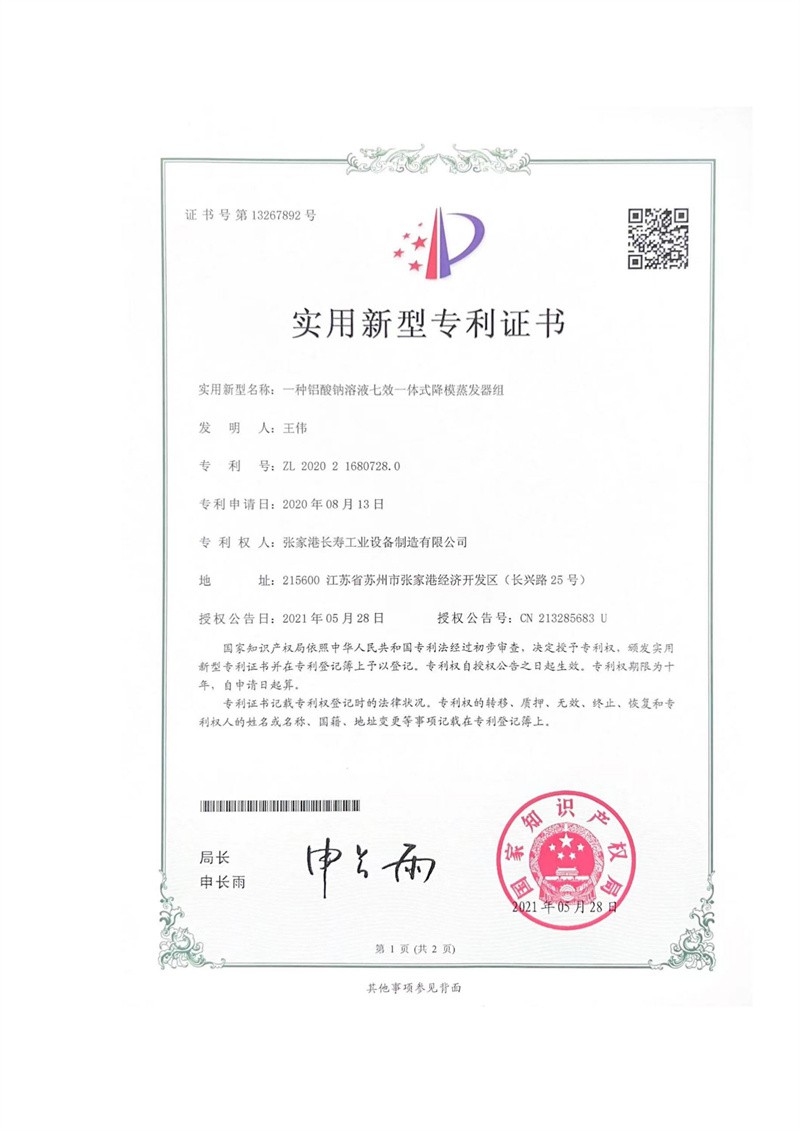
Our Certificate



FAQ
Hot Tags: hydrogen storage tank, China hydrogen storage tank manufacturers, suppliers, factory, storage tank for vacuum systems, storage tank for emulsifiers, sloped bottom storage tank, storage tank for pellets, storage tank for xenon, fixed storage tank


