


Why Choose Us?
Professional Team
We possess a high-tech and well-trained team consisting of over 260 employees, among whom there are 80 engineering and technical personnel (5 senior engineers and 50 professionals with junior and intermediate titles) and more than 100 certified welders.
Advanced Equipment
In addition to the high-quality production supporting equipment, the company is equipped with advanced and perfect inspection and testing equipment, pressure leakage test equipment, physical and chemical equipment, and a welding laboratory, etc.
Complete Product Range
Our products include heat exchanger, separator, reactor, storage tank, tower, cryogenic equipment, filters, chemical and alumina evaporator.
Quality Control
The company has passed ISO: 9001 standard quality system certification, ISO14001 environmental management system certification, and ISO45001.
What Is Tube Bundle Heat Exchanger
Tube bundle heat exchanger is a typical heat exchanging device that make two liquid with different temperatures to exchange heat. Through the heat exchanger tank, one fluid can be cooled down and the other fluid can be heated to meet the required temperature.

Stainless Steel Thin Wall Bellows Heat Exchanger
Stainless steel thin-wall bellows heat exchanger is a kind of high efficiency heat exchange equipment.

Stainless Steel Heat Exchanger
Stainless steel heat exchanger is an efficient heat exchange equipment widely used in modern engineering applications.

Threaded tube heat exchanger is a kind of efficient heat exchange equipment.

Thin-Wall Titanium Bellows Heat Exchanger
Thin-wall titanium bellows heat exchanger is an efficient and corrosion-resistant heat exchange equipment.

Double Tubesheet Heat Exchanger
Double-tubesheet heat exchanger is a kind of high efficiency heat exchange equipment with unique structure and exquisite design.

Shell-and-tube heat exchangers are a common type of heat exchange equipment that consists of a series of tubes that are enclosed in a housing.

Tube bundle heat exchanger, also known as tube heat exchanger, is a heat exchange equipment widely used in chemical, petroleum.

Stainless Steel Heat Exchanger Tubes
Stainless steel heat exchanger tubes are crucial components in various industrial and HVAC (heating, ventilation, and air conditioning) systems.

A steam heat exchanger is a device used to transfer heat by means of a temperature difference between steam and another medium.
What Are the Components of Tube Bundle Heat Exchanger
Shell: The shell is the outermost casing or housing of the heat exchanger. It typically has a cylindrical or rectangular shape and provides structural support for the internal components. The shell contains both the tube side and the shell side fluid inlets and outlets.
Tubes: Tubes are the core components of the heat exchanger where heat transfer occurs. They are typically made of materials like copper, stainless steel, or various alloys. The tube side fluid flows through these tubes, and heat is transferred through the tube walls to the shell side fluid.
Tube sheets: Tube sheets are thick, flat plates at the ends of the shell where the tubes are mounted. They serve to support and secure the tubes within the shell and create a seal to prevent leakage between the tube side and the shell side fluids.
Baffles: Baffles are internal components, often in the form of metal plates or rods, which are placed inside the shell. Their primary purpose is to direct the shell side fluid flow and enhance heat transfer by creating turbulence. Baffles ensure that the shell side fluid passes over and around the tubes to maximize heat exchange efficiency.
Tube bundle: The collection of tubes, tube sheets, and baffles is often referred to as the tube bundle. It is the core heat transfer section of the heat exchanger, and it can be removed for maintenance and cleaning purposes.
End caps and channel covers: The ends of the shell are sealed with end caps or channel covers. These components prevent the shell side fluid from bypassing the tube bundle and ensure that it flows over the entire tube surface.
The concept and operation of a tube bundle heat exchanger are rather simple and are based on the flow and thermal contact of two liquids. The name of a tube bundle heat exchanger serves as an explanation of the process, which is the exchanging of temperature between two fluids. In a heat exchanger, a heated or hot fluid will flow around a cold fluid and transfer heat in the direction of the flow of the cold fluid.
Whenever two materials come into contact, heat will be transferred through the conductive surfaces between them. Tube bundle heat exchangers are designed to facilitate this heat transfer, allowing two different fluids to exchange heat through metal surfaces.
In a tube bundle heat exchanger, one fluid moves through the tubes while the other flows around the tubes within the shell. For instance, in a straight tube tube bundle heat exchanger, the shell fluid enters through the top inlet, while the tube fluid enters from the bottom right inlet.
These heat exchangers consist of two main sections: The shell side and the tube side. Proper fluid allocation is essential, determining which side will handle the hot fluid and which will handle the cold fluid.
In cases where there is a pressure differential between the fluids, the lower pressure fluid is directed through the shell inlet, as the tubes are built to withstand higher pressures.
● Shell side
When configuring fluid flow on the shell side, it's crucial to remember that the shell is costlier to manufacture compared to the tubes and is also more challenging to clean. Baffles inside the shell help manage the fluid flow, directing it across the tube bundles.
The shell side is typically used for handling viscous fluids and those with high flow rates, as it provides enhanced turbulence and a higher heat transfer coefficient. This setup is particularly effective for managing large temperature differences.
● Tube side
To ensure turbulent flow on the tube side, turbulators are installed inside the tubes through the openings in the tube sheet. This turbulence enhances the heat transfer efficiency, similar to the effect in the shell side. Additionally, turbulators help maintain the cleanliness of the tubes by preventing fouling. While the tubes generally have lower turbulence and pressure drop, they facilitate a smoother flow of the fluid.
● Passes
Tube bundle heat exchangers are categorized by the number of passes, which can range from one to eight or more. This is denoted as 1-1, 1-2, 1-4, etc., where the first number represents the number of shells and the second indicates the number of passes. Each pass refers to the number of times the fluid circulates through the shell side. For instance, a single-pass heat exchanger allows the fluid to traverse the shell only once. Increasing the number of passes typically enhances the heat transfer coefficient.
Tube bundle heat exchangers are extensively used in a number of industries, particularly in refineries, owing to the various advantages they offer over other heat exchangers:
● Tube bundle heat exchangers have more heat transfer efficiency.
● These heat exchangers are an optimal solution for swimming pool heating, mining machinery, hydraulic power packs, etc.
● These heat exchangers can be easily dismantled. Thus, cleaning and repairing is easy.
● The heat exchangers are compact in size.
● The capacity of these heat exchangers can be increased by adding plates in pairs.
● These exchangers are affordable compared to the plate type coolers.
● As the pressure test is relatively simple, one can easily locate tube leaks and fix them.
● These heat exchanger can be used in systems, which have higher operating temperatures and pressures.
Design Steps of Tube Bundle Heat Exchanger
● Determine the tube bundle heat exchanger's Purpose
What particular heat transfer requirements does your application have? Is a fluid being heated or cooled? What are the required temperatures and pressures for the fluids on the shell side and the tube side? A good design depends on your ability to comprehend the objectives and limitations of your tube bundle heat exchanger.
● Selection of Materials
Choosing the appropriate materials for the tube bundle heat exchanger's shell, tubes, and other parts is essential. Materials are chosen based on a variety of criteria, including corrosion resistance, temperature and pressure requirements, and the characteristics of the fluids being handled.
● Determine Heat Transfer Area
In order to determine how much heat transfer area a tube bundle heat exchanger will need, it is necessary to know both the heat transfer rate and the temperature difference between the two fluids. The area of heat transmission can be calculated with the help of the following formula:
Q = U * A * ΔTlm
Q = Rate of heat exchange (in watts or British thermal units per hour).
U = Total heat transfer coefficient (in W/m²·K or BTU/hr·ft²·°F).
A = Area of heat exchange (in square metres or square feet).
Tlm = Average temperature gradient as a logarithm (in Kelvin or Fahrenheit).
● Tube Layout and Geometry
The tube bundle heat exchanger's efficiency is tremendously affected by the tubes' geometry and layout. There are a lot of options to consider while designing a tube, including the tube's diameter, length, pitch, and number of passes. While longer tubes with smaller diameters can improve heat transfer efficiency, they may also result in larger pressure drops. The shell-side fluid flow is influenced by the tube pitch, or the distance between the tubes.
● Calculate the Required Number of Tubes
The intended heat transfer rate and the tube-side fluid flow rate determine how many tubes are needed in the tube bundle heat exchanger. You can use the following formula to determine how many tubes are needed:
N = Q / U A ΔTlm
N = The number of tubes.
Q = Heat – transfer rate.
U = Heat transfer coefficient.
A = Area of heat exchange.
Tlm = Logarithmic mean temperature difference
● Sizing the Shell
A number of variables, including the size and quantity of tubes, fluid flow rates at the shell's side, and the required pressure drop, affect the shell's dimensions, including its length and diameter. The diameter of the shell ought to permit sufficient fluid movement while leaving sufficient room for the tubes.
● Estimation of Pressure Drop
Appropriate design requires an estimation of the pressure drop on the shell-side as well as the tube-side. Pressure drop has an impact on the tube bundle heat exchanger's effectiveness and performance. Calculations of pressure decreases consider variables such as fluid characteristics, tube configuration, and flow rates.
● Baffle Design
Baffles are installed inside the shell to provide better heat transfer and direct fluid flow. The spacing and design of baffles is critical to achieving the desired heat transfer efficiency while minimising pressure and drop. Depending on the purpose, different baffle configurations, including segmental or helical baffles, might be employed.
● Determining the Overall Heat Transfer Coefficient
The overall heat transfer coefficient plays a significant role in tube bundle heat exchanger design (U). Heat-transfer resistance on both the shell and tube sides is calculated. Empirical correlations can be used to determine U, a variable that is material- and design-specific to tube bundle heat exchangers.
● Consideration of Fouling and Maintenance
Over time, fouling the buildup of deposits on the tube bundle heat exchanger's surfaces can cause it to lose efficiency. When choosing materials and calculating the heat transfer area, designers must take fouling into consideration. The tube bundle heat exchanger should also be made with simple maintenance in mind, which could entail the use of detachable tube bundles.
● Thermal Expansion
When constructing a tube bundle heat exchanger, take thermal expansion into account. Temperature variations may cause the materials to expand or contract at different rates. The tube bundle heat exchanger structure may experience stress as a result, which needs to be controlled to prolong the life of the system.
Cleaning of Tube Bundle Heat Exchanger
Regular cleaning schedule
Establish a routine cleaning schedule based on the specific requirements of tube bundle heat exchanger and the nature of the fluids being processed. Regular cleaning helps prevent the buildup of fouling and scaling.
Identify fouling types
Determine the type of fouling or deposits present in the tube bundle heat exchanger. Common types include scale, corrosion products, biological growth, and sediment. Different fouling types may require different cleaning methods.
Chemical cleaning
Use appropriate cleaning chemicals or solvents to dissolve and remove fouling deposits. Consult with chemical experts to select the right cleaning agents for your specific fouling problem.
Mechanical cleaning
Mechanical methods like brushing, water jetting, or using scrapers can be effective for physically removing deposits from tube surfaces. Care must be taken to avoid damaging the tube material.
Avoid abrasive materials
Refrain from using abrasive cleaning materials or methods that can damage the tube surfaces, especially in cases of delicate materials or thin-walled tubes.
Tube bundle heat exchanger dismantling
For more severe fouling cases, consider partially or fully dismantling the tube bundle heat exchanger to allow better access for cleaning. This may be necessary for shell-and-tube tube bundle heat exchangers.
Water quality control
Ensure that the quality of water or other fluids circulating through the tube bundle heat exchanger is maintained at appropriate levels to minimize fouling. This can include pH control, water softening, and filtration.
Oil Refineries and Gas Processing
Tube bundle heat exchangers are used throughout oil refineries, upgraders, and SAGD facilities due to their robust construction and ease of maintenance and cleaning. Tube bundle heat exchanger is also commonly found in gas processing and gas transmission industries as they are well suited to high-pressure applications.
Petrochemical Industries
In petrochemical plants, these exchangers are used to condense, cool, or heat various chemicals in the refining process. They have to be tough to handle corrosive substances and high pressures.
Power Generation
Power plants use tube bundle heat exchangers to condense steam back into water after it has spun the turbines. They're a key part of recycling steam and keeping efficiency up.
Food Processing
The food industry uses these exchangers to heat or cool products gently and evenly.
Zhangjiagang Changshou Industrial Equipment Manufacturing Co., Ltd
The company has a registered capital of RMB 80 million and a production base area of 35,000 square meters., and a high-tech and well-trained team of more than 260 employees, including 80 engineering and technical personnel (5 senior engineers and 50 professionals with junior and intermediate titles) and more than 100 certified welders. These employees have the extensive experience in the manufacturing and installation of pressure vessels and the on-site manufacturing of large equipment. In addition to the high-quality production supporting equipment, the company has the advanced and perfect inspection and testing equipment, pressure leakage test equipment, physical and chemical equipment, welding laboratory and so on.


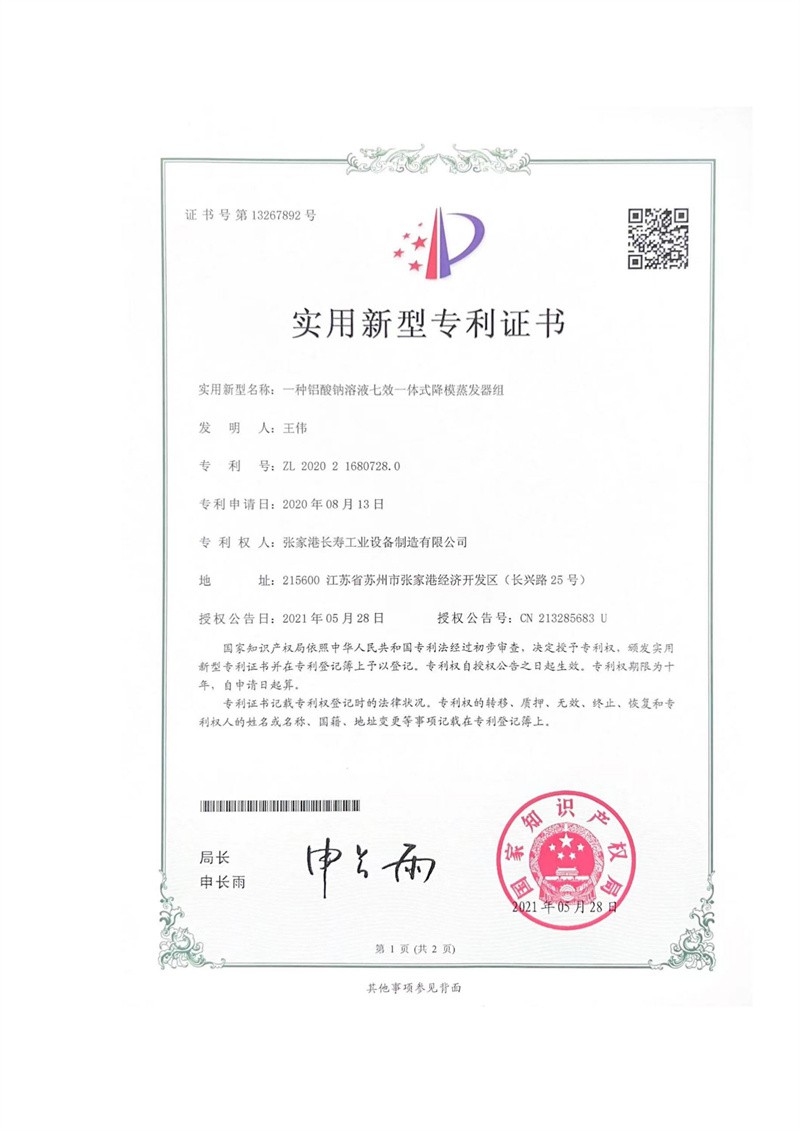
Our Certificate



FAQ
Hot Tags: tube bundle heat exchanger, China tube bundle heat exchanger manufacturers, suppliers, factory, Stainless Steel Heat Exchanger Tubes, heat exchanger for flange systems, compact heat exchanger, heat exchanger for combined heat and power, heat exchanger for cogeneration, heat exchanger for fitting systems


