


Why Choose Us?
Professional Team
We possess a high-tech and well-trained team consisting of over 260 employees, among whom there are 80 engineering and technical personnel (5 senior engineers and 50 professionals with junior and intermediate titles) and more than 100 certified welders.
Advanced Equipment
In addition to the high-quality production supporting equipment, the company is equipped with advanced and perfect inspection and testing equipment, pressure leakage test equipment, physical and chemical equipment, and a welding laboratory, etc.
Complete Product Range
Our products include heat exchanger, separator, reactor, storage tank, tower, cryogenic equipment, filters, chemical and alumina evaporator.
Quality Control
The company has passed ISO: 9001 standard quality system certification, ISO14001 environmental management system certification, and ISO45001.
What Is Stainless Reactor
Stainless reactor is a type of vessel used in many different industries, including pharmaceutical, chemical, and food production. It is made of high-quality stainless steel, which offers several advantages over other materials.
Stainless steel is corrosion-resistant, which makes it ideal for use in harsh environments where other materials might corrode and degrade. It is also easy to clean and sterilize, making it perfect for use in industries where cleanliness is critical.
Another advantage of using stainless steel for reactors is that it is durable and long-lasting. These reactors can withstand high pressures and temperatures, making them ideal for use in demanding processes.

Stainless Steel Jacketed Reactor
A stainless steel reactor is a type of industrial equipment used for carrying out chemical reactions or processes involving stainless steel materials.

A stainless steel reactor is a type of industrial equipment used for carrying out chemical reactions or processes involving stainless steel materials.

It Is a kind of container for chemical reaction mainly made of stainless steel.

SS316 Reactor is made of 316 stainless steel with excellent corrosion resistance and high temperature stability.

Stainless Steel Chemical Reactor
A stainless steel chemical reactor is a vessel made of stainless steel, a durable and corrosion-resistant material.

High Pressure Stainless Steel Reactor
It is a stainless steel reactor that can withstand high pressure environment.

Glass Lined Stainless Steel Reactor
A glass-lined stainless steel reactor is a type of stainless steel chemical reactor that has a glass lining on its inner surface.


Stainless Steel Pressure Reactor
A stainless steel pressure reactor is a type of chemical reactor made from stainless steel.
Stainless Reactor Pros
Durability
Stainless reactor is known for its strength and resistance to wear and tear, making these reactors long-lasting and resilient to physical impacts.
Versatility
These reactors can handle a wider range of temperatures and pressures, making them suitable for a variety of chemical processes.
Ease of fabrication
Stainless reactor reactors can be manufactured in various shapes and sizes, offering flexibility in design and capacity.
How Do Stainless Reactors Work
Preparation phase
The process starts by preparing and setting the machine up according to the product specification. The reactants are prepared alongside the machine, which will participate in the mixing process. After everything is set, the reactants are entered into the reactor through an inlet.
Mixing phase
The stirrer will play its part as soon as the reactants enter the reactor. Moreover, the heat exchanger will provide the necessary heat for the chemical reaction to complete the reaction. The process continues with all the factors remaining constant, and a homogenous mixture will be formed.
Releasing phase
After the process is completed, the machine will release the homogenous mixture. Note that the reactor properties will remain the same during the outlet process as during the inlet process.
Types of Stainless Reactors
Stainless chemical reactor
Designed specifically for chemical processing applications, stainless chemical reactors boast corrosion resistance and high temperature capabilities. They come in various configurations, including batch reactors for small-scale operations and continuous flow reactors for large-scale production.
High pressure stainless reactor
Essential for processes requiring elevated pressures such as polymerization or hydrogenation, high pressure stainless reactors are engineered with reinforced walls and sealing mechanisms to ensure safety and efficiency under high-pressure conditions.
Jacketed stainless reactor
Jacketed stainless reactors feature a double-walled design with an outer jacket for heating or cooling fluids. This design allows precise control of reaction temperatures, making it suitable for processes sensitive to temperature changes, such as pharmaceutical and specialty chemical production.
Stainless reactor vessel
The core container where chemical reactions take place, the stainless reactor vessel is designed to meet rigorous safety and performance standards. It accommodates various accessories such as agitators, baffles, and ports for enhanced operational flexibility and efficiency.
● Chemical processing and manufacturing
At the heart of the chemical industry, reactors are used for synthesizing a wide array of products, including polymers, petrochemicals, and industrial chemicals. Their role in facilitating controlled reactions is crucial for producing materials with desired properties and specifications, ensuring efficiency and safety in large-scale manufacturing processes.
● Oil and gas
In the oil and gas sector, stainless reactors play a vital role in refining and processing petroleum products. They are employed in processes such as cracking, reforming, and alkylation to transform crude oil into usable products like gasoline, diesel, and other fuels. Reactors enable the precise control of conditions necessary for these complex transformations.
● Pharmaceutical
The pharmaceutical industry relies on stainless reactors for the production of active pharmaceutical ingredients and other drug compounds. These reactors must meet stringent regulatory standards for cleanliness and control to ensure the safety and efficacy of pharmaceutical products. They allow for the precise manipulation of reaction conditions, which is essential for achieving high-purity and specific configurations of drug molecules.
● Biochemical engineering
In biochemical engineering, reactors are used for fermentations and enzyme-catalyzed reactions, crucial for producing antibiotics, hormones, and vaccines. These applications often require specialized reactors designed to support biological processes, such as bioreactors, which maintain optimal conditions for microbial or cell cultures.
● Environmental engineering and protection
Stainless reactors also find applications in environmental engineering, particularly in waste treatment and pollution control processes. They are instrumental in treating water and wastewater, air purification, and converting waste materials into renewable energy sources. Reactors designed for these purposes help in mitigating environmental pollution and advancing sustainable practices.
● Design volume: 50L~50000L (The volume can be designed as required.)
● Reaction temperature: Normal temperature -300℃ or higher, depending on working conditions.
● Reaction pressure: -0.1-0.1mpa.
● Equipment material: 304 stainless steel, 321 stainless steel, 316L stainless steel or other materials.
● Mixing form: Paddle type, anchor paddle type, frame type, ribbon type, turbine type, dispersing disk type, combined type, etc.
● Heating method: Electric heating, steam heating, water bath heating, thermal oil heating.
● Thermal medium: Thermal oil, steam, hot water, electric heating.
● Heat transfer structure: Jacket type, outer half-pipe type, inner coil type.
● Stirring speed: The choice of stirring speed depends on the mixing and mixing needs of the materials, for conventional liquid material polymerization, the speed is 63-85r/min, when mixing powder-containing materials with liquids, the dispersion effect needs to be achieved, and the speed is 0-1460r/min. , Containing oil and liquid or two incompatible liquids need to be mixed to achieve an emulsification effect, and the rotation speed is 0-2800 r/min.

Knowledge of Cleaning and Maintenance of Stainless Reactor
Daily cleaning: The reactor should be cleaned immediately after use to avoid product residues in the container to avoid affecting the next use. Generally, rinse with clean water and wipe clean.
Regular cleaning: Regularly clean thoroughly, and special detergents or alkaline detergents can be used. During the cleaning process, care should be taken to avoid using overly acidic or alkaline detergents to prevent damage to the stainless surface.
Prevent rust: If rust appears on the surface of the stainless reactor, urea or dilute hydrochloric acid can be used to remove the rusted parts, and anti-corrosion treatment should be carried out in time to extend the service life of the reactor.
Regular inspection: Regularly check the sealing performance of the reactor, the operation of the agitator, etc., and find and deal with problems in time to ensure the normal operation of the equipment.
Use appropriate accessories: During cleaning and maintenance, use cleaning tools and accessories that meet the requirements, and avoid using hard objects to scratch or wear the stainless surface.
How to Use a Stainless Reactor
1. Do the dosing in strict accordance with the material ratio regulated in the technical regulations. Control the heating rate and feed material slowly. The reactor must run smoothly when it is heating up or cooling down. The too fast heating and cooling speed causing the sudden superposition of pressure and stress should be prohibited, which can lead to the deformation or damage of the equipment. Strictly implement the training system before starting up. Record the equipment operation and hand over records well, preventing the abnormal phenomena and equipment accidents caused by incomplete records.
2. Check whether there is any abnormal phenomena of reactor before operation. Don't open the upper cover of reactor and amphenol connector on the operating plate to avoid electric shock.
3. Check the accuracy of instrument regularly to prevent accidents caused by instrument failure.
4. Control the stirring speed to make it accelerate slowly. The temperature rising speed and pressurization should be done in strict accordance with the operating instruction.
5. Rapid cooling is strictly prohibited to avoid equipment damage caused by excessive temperature differentials.
6. Check and replace the rupture disk regularly. Due to different operating temperatures and pressures can cause the burn-in of rupture disk, it should be replaced in time.
7. Don't disassemble with pressure.
●First check whether the stainless reactor installation has been installed, it must be installed in a strong,stable work table, as for the height of the table, according to different customer's different work situations to measure. Don't fill your work area, make sure there's room at the counter for future installation and protection.
● In the installation process of the stainless reactor, the required shaft and the horizontal plane of the ground are as straight as possible, less than 1/1000of the total height of the equipment.
●The self-provided parts and safety valves on each process of the equipment must be equipped in accordance with the professional regulations of the stainless reactor.
●After the device operation end of the stainless reactor must carefully check the various connection parts of the reactor and whether the transmission position is strong.
Zhangjiagang Changshou Industrial Equipment Manufacturing Co., Ltd
The company has a registered capital of RMB 80 million and a production base area of 35,000 square meters., and a high-tech and well-trained team of more than 260 employees, including 80 engineering and technical personnel (5 senior engineers and 50 professionals with junior and intermediate titles) and more than 100 certified welders. These employees have the extensive experience in the manufacturing and installation of pressure vessels and the on-site manufacturing of large equipment. In addition to the high-quality production supporting equipment, the company has the advanced and perfect inspection and testing equipment, pressure leakage test equipment, physical and chemical equipment, welding laboratory and so on.


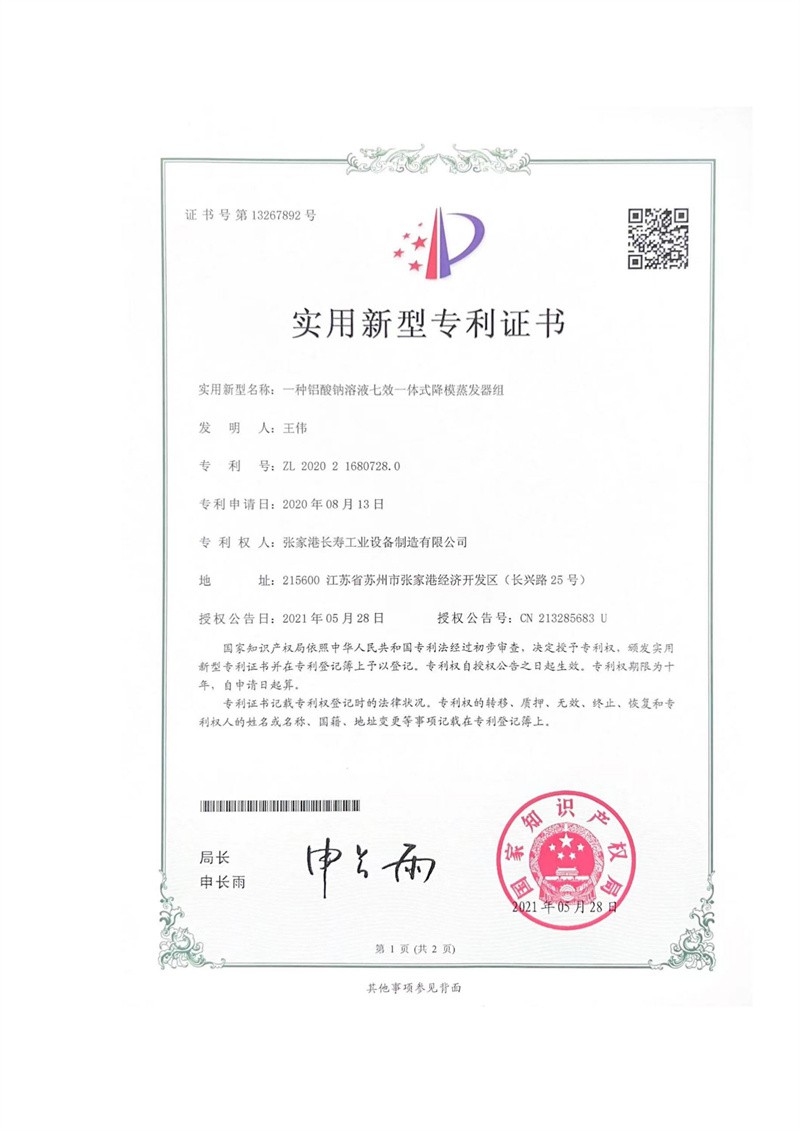
Our Certificate



FAQ
Hot Tags: stainless reactor, China stainless reactor manufacturers, suppliers, factory, reactor startup, reactor algorithms, reactor selectivity, reactor performance, reactor software, reactor shipping


